

Artificial Intelligence (AI) is reshaping the entertainment industry by introducing innovative ways to create, distribute, and consume content. From personalized recommendations to interactive experiences, AI is at the forefront of this transformation. In this article, we will explore the top 10 AI for entertainment that are making a significant impact on how we engage with media and entertainment.
The Role of AI in Entertainment
AI is revolutionizing entertainment by enhancing content creation, personalizing user experiences, and streamlining production processes. It analyzes vast amounts of data to understand user preferences, generates realistic graphics, and even composes music. This technology not only improves efficiency but also opens up new creative possibilities for artists and producers.
Benefits of Using AI in Entertainment
Integrating AI in entertainment offers numerous benefits, including:
- Personalization: AI can tailor content recommendations based on individual preferences and behavior.
- Efficiency: Automation of repetitive tasks saves time and reduces production costs.
- Creativity: AI generates new ideas and assists in content creation, pushing the boundaries of creativity.
- Engagement: Interactive AI-driven experiences captivate audiences and enhance user engagement.
- Insights: Data analytics provide valuable insights into audience behavior and preferences.
Top 10 AI for Entertainment
🥇 1. Runway ML
Website: https://runwayml.com
Description:
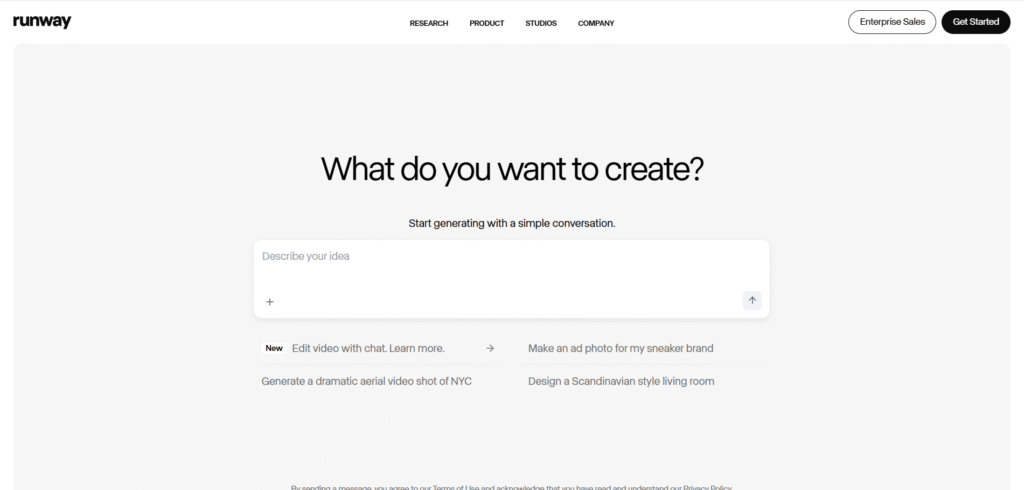
Runway ML is one of the most influential AI tools in the creative and entertainment industries.
It allows users to generate, edit, and enhance videos using advanced AI features like text-to-video generation (Gen-2), motion tracking, background removal, and object masking — all without traditional video-editing software.
Used by indie creators and major studios alike (even in Oscar-winning films like Everything Everywhere All At Once), Runway has become the backbone of modern AI-assisted filmmaking.
Best For: Filmmakers, editors, visual effects artists, and content creators.
Highlights:
- Gen-2 text-to-video and image-to-video generation
- Background removal, rotoscoping, and inpainting
- Motion tracking and scene editing
- Cloud-based editing collaboration
🥈 2. LTX Studio (by Fable)
Website: https://ltxstudio.com
Description:
LTX Studio is redefining filmmaking by allowing creators to generate movies from scripts.
You can input a text prompt or screenplay, and LTX builds entire storyboards, camera movements, and animated scenes automatically — giving creators full control over cinematic direction, lighting, and camera angles.
It’s like having an AI-powered film production studio at your fingertips.
Best For: Film directors, animators, and storytellers.
Highlights:
- Script-to-scene generation
- Cinematic camera direction control
- Scene lighting and motion simulation
- Real-time collaboration for storyboarding
🥉 3. ElevenLabs
Website: https://elevenlabs.io
Description:
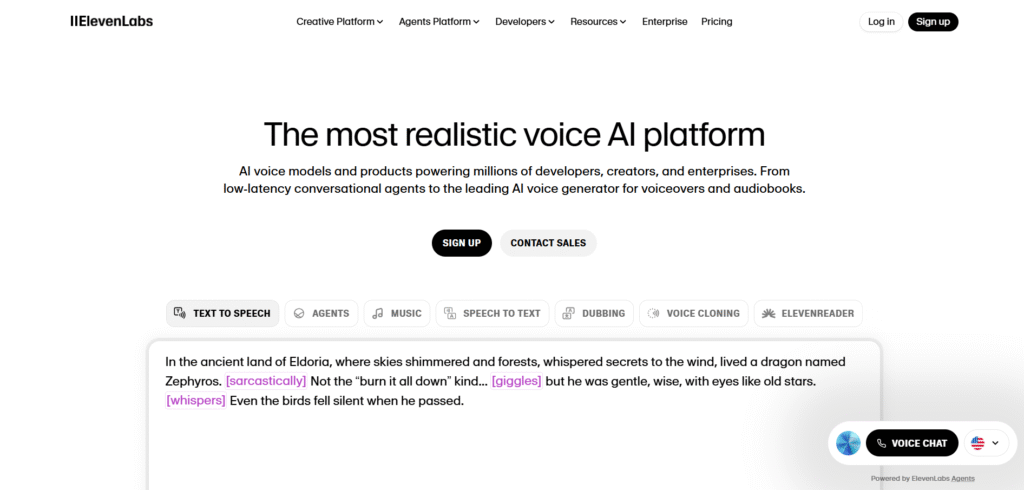
ElevenLabs is the industry leader in AI voice synthesis and dubbing.
It produces hyper-realistic, emotion-driven voices that are almost indistinguishable from real humans.
Used widely in gaming, film dubbing, audiobooks, and virtual avatars, it enables voice generation in multiple accents and languages.
ElevenLabs is already helping entertainment companies scale localization and narration with unprecedented quality.
Best For: Studios, game developers, podcasters, and content creators.
Highlights:
- Text-to-speech with emotion and intonation
- Multilingual voice generation
- Voice cloning and dubbing
- Commercial usage rights for studios
4. Flawless AI (DeepEditor)
Website: https://www.flawlessai.com
Description:
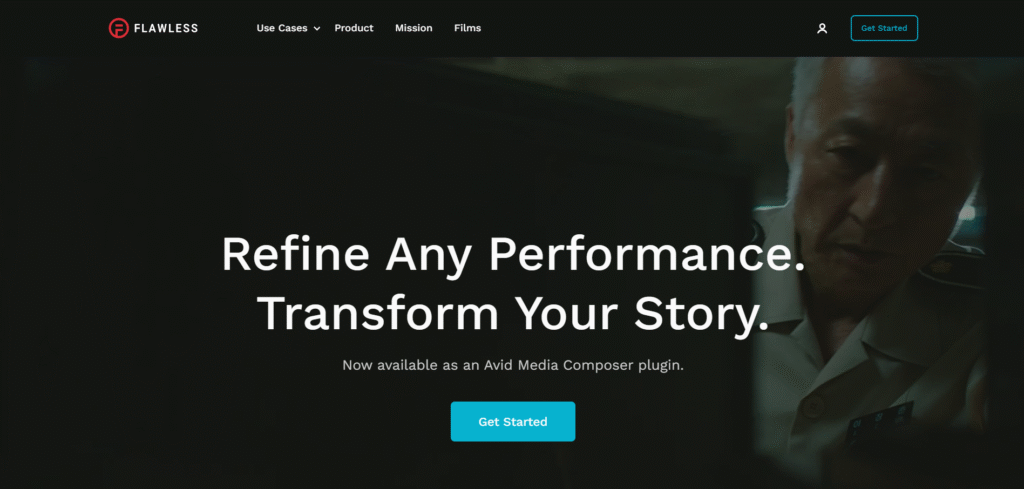
Flawless AI’s DeepEditor is a groundbreaking tool in post-production. It allows filmmakers to change dialogue or language in an existing video while maintaining perfect lip-sync and facial emotion alignment.
This means a film can be redubbed in another language or have last-minute dialogue edits — without expensive reshoots or awkward dubbing.
Best For: Film studios, localization teams, and post-production houses.
Highlights:
- Lip-sync and facial realism with AI
- Multilingual dialogue replacement
- Seamless integration in film workflows
- Reduces need for reshoots and ADR
5. OpenAI Sora
Website: https://openai.com/sora
Description:
Sora is OpenAI’s text-to-video AI system, capable of generating cinematic-quality video clips directly from written descriptions.
It understands camera movement, perspective, lighting, and motion dynamics — producing clips that look like they were filmed with professional equipment.
While still in controlled release, Sora is being tested for advertising, animation, and pre-visualization workflows.
Best For: Creative directors, advertisers, and content studios.
Highlights:
- Text-to-video generation
- Dynamic camera movement
- Realistic environmental rendering
- Storyboarding and pre-visualization
6. Midjourney
Website: https://www.midjourney.com
Description:
Midjourney is an AI art generator renowned for concept art, poster design, and mood visualization.
Entertainment teams use it to develop film scenes, characters, environments, and visual aesthetics before production even begins.
It’s often used alongside Runway and LTX for pre-visualization and style exploration.
Best For: Concept artists, game designers, and creative directors.
Highlights:
- Text-to-image art generation
- Photorealistic or stylized output
- Ideal for storyboards & film concept art
- Active Discord-based community for artists
7. 15.ai
Website: https://15.ai
Description:
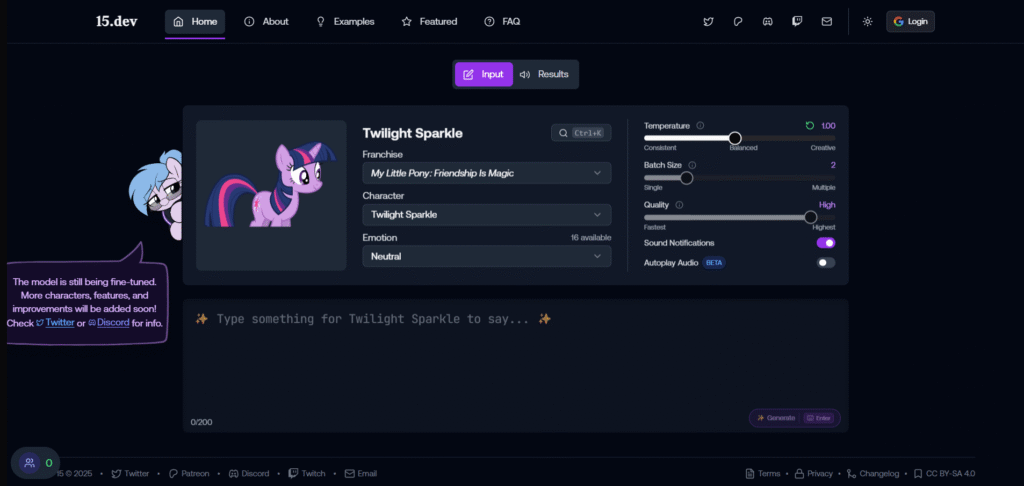
15.ai is a unique AI voice recreation platform that generates character voices from TV shows, games, or movies — all in expressive, emotional tones.
Originally popular for fan projects, it’s now used in indie games and animation to recreate iconic voices or build new ones.
Best For: Game developers, animators, fan creators.
Highlights:
- Character-accurate voice cloning
- Emotional tone rendering
- Free and open-source origins
- Popular in fan dubbing and game development
8. MusicLM (by Google DeepMind)
Website: https://deepmind.google
Description:
MusicLM is Google’s AI music generation model that creates music from natural language prompts.
You can describe a style, mood, or tempo (“an 80s action soundtrack with electric guitar and synths”) — and MusicLM produces a complete instrumental track.
It’s changing how composers and sound designers prototype music ideas.
Best For: Musicians, composers, content creators.
Highlights:
- Text-to-music composition
- Style-based and mood-based control
- Layered track generation
- Royalty-free music output
9. AIVA (Artificial Intelligence Virtual Artist)
Website: https://www.aiva.ai
Description:
AIVA is an AI composer that creates original symphonies, soundtracks, and background music.
It’s used by filmmakers, game studios, and ad agencies to create royalty-free music tailored to specific emotions or genres.
AIVA understands musical structure and harmony, allowing users to tweak intensity, instruments, or tempo — making it great for cinematic soundscapes.
Best For: Filmmakers, content creators, and advertising agencies.
Highlights:
- AI music composition by genre
- Customizable tone and emotion controls
- Royalty-free licensing
- Integrates into editing workflows
10. ImagineArt (by Vyro.ai)
Website: https://imagine.art
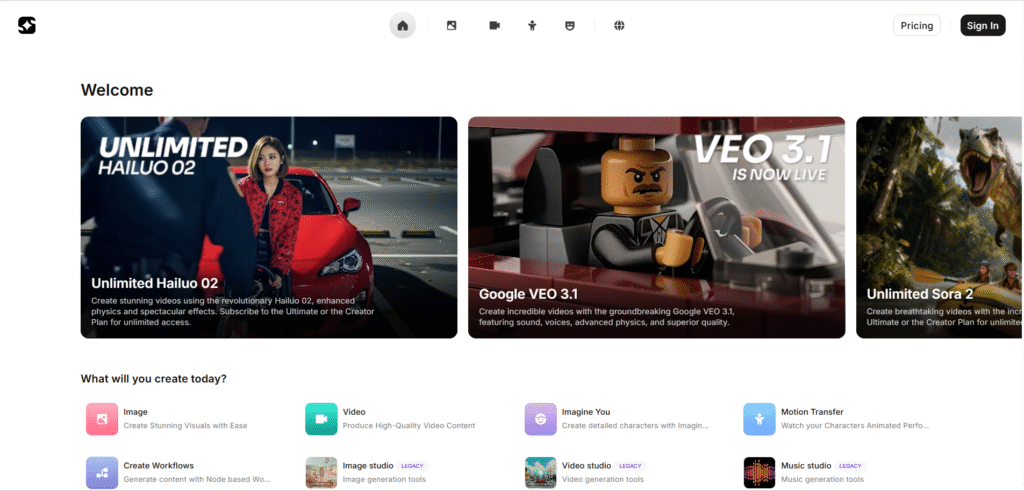
Description:
ImagineArt is an all-in-one AI creativity suite for entertainment professionals.
It combines text-to-image, video, and sound generation in one tool — letting creators produce music videos, visual effects, or social media content seamlessly.
It’s ideal for creative agencies and content creators who want to design visuals and audio in the same ecosystem.
Best For: Social media creators, music video producers, marketing teams.
Highlights:
- User-friendly interface for non-designers
- Multi-modal AI (text → image, video, and audio)
- Fast creative prototyping
- Royalty-free content generation
How to Choose the Right AI for Your Entertainment Needs
When selecting AI tools for entertainment, consider the following factors:
- Features: Ensure the tool offers the specific features you need, such as content creation, personalization, or data analytics.
- User Experience: Look for a user-friendly interface that simplifies the creative process.
- Integration: Choose a tool that integrates seamlessly with your existing software and platforms.
- Scalability: Ensure the tool can grow with your needs, accommodating more users and content as required.
- Support: Opt for a tool that provides reliable customer support and training resources.
FAQs
What is the best AI for entertainment? The best AI for entertainment depends on your specific needs. For personalized content recommendations, Netflix and Spotify are top choices, while Adobe Sensei and Amper Music excel in content creation.
How does AI personalize entertainment experiences? AI personalizes entertainment experiences by analyzing user data, such as viewing or listening history, preferences, and behavior, to recommend content tailored to individual tastes.
Can AI create original content? Yes, AI can create original content, including music, videos, and written text. Tools like Amper Music and OpenAI GPT-4 enable creators to produce unique and engaging content efficiently.
Is AI in entertainment cost-effective? Yes, AI can be cost-effective by automating repetitive tasks, reducing production time, and providing data-driven insights that optimize content creation and distribution.
How does AI enhance user engagement in entertainment? AI enhances user engagement by offering personalized recommendations, interactive experiences, and high-quality content that resonates with audiences.
Is the use of AI in entertainment safe and ethical? The use of AI in entertainment is generally safe, but it is essential to consider ethical implications, such as data privacy and the potential for deepfake misuse. Reputable platforms implement safeguards to address these concerns.
Conclusion
AI is transforming the entertainment industry by offering personalized, efficient, and innovative solutions for content creation and consumption. By leveraging these advanced tools, entertainment companies can enhance user experiences, streamline production processes, and push the boundaries of creativity. Whether you are a content creator, producer, or consumer, embracing AI technology can significantly elevate your entertainment experience.